
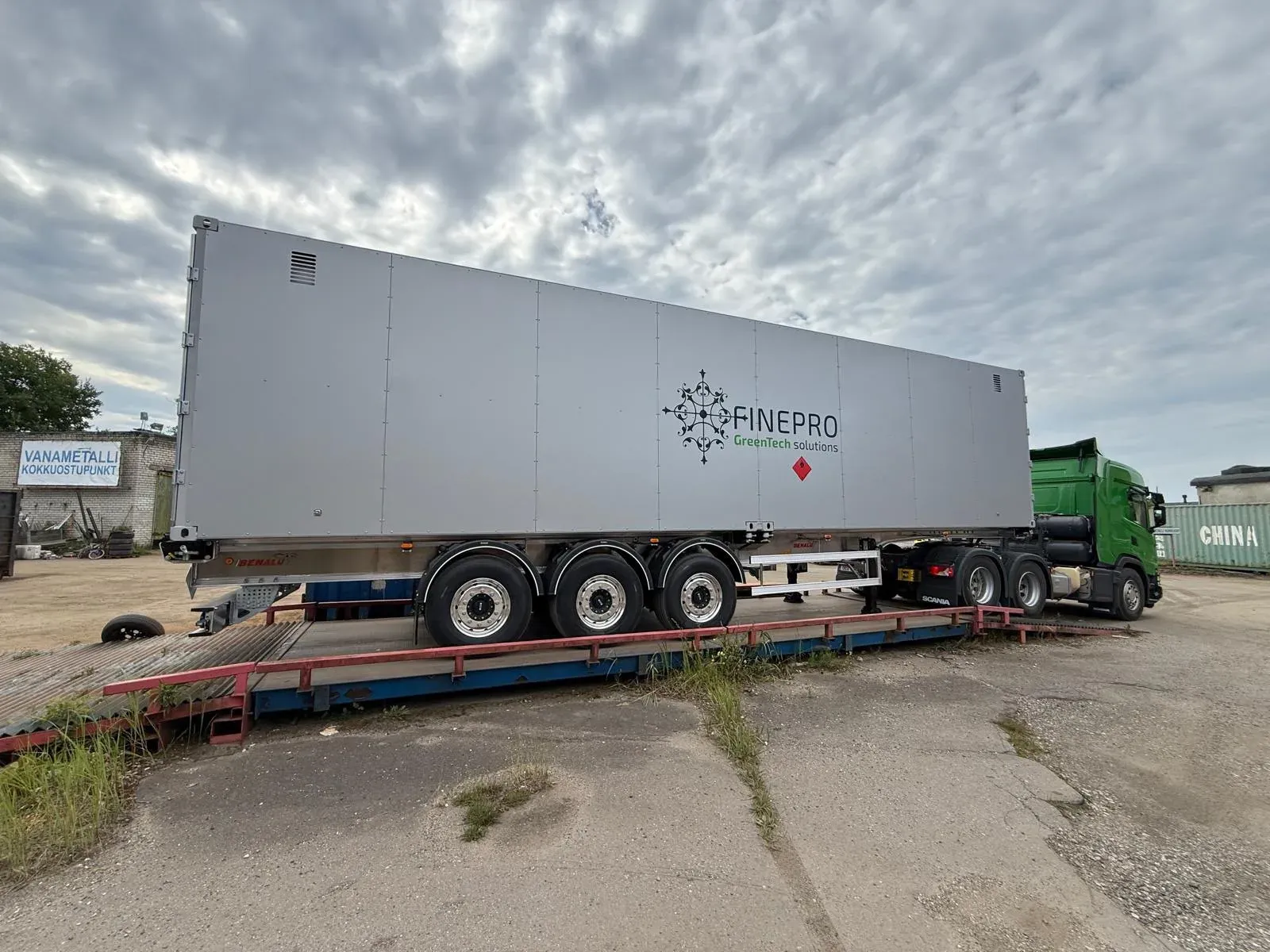
Most people approach this decision the same way: get both quotes, divide by capacity, pick the lower number per Nm³.
Do that and you will find something surprising. The price per usable Nm³ is almost identical. Within a couple of percent. There is essentially no economy of scale in buying the bigger container.
That is not a quirk of one supplier’s pricing. It is structural, and understanding why tells you exactly when the 40 ft is worth buying — and when it is not.
Why the bigger container is not cheaper per Nm³
In a Type 4 MEGC, the composite cylinders are 75–77% of the internal cost of the unit. Everything else — the frame, the valves and manifold, the piping, the paint, the certification — is the remaining quarter.
Cylinders scale linearly. Eighteen cylinders cost 1.64 times what eleven cylinders cost, because they are the same cylinder. The frame does not scale linearly, but the frame is not where the money is.
So the 40 ft carries 1.64× the gas and costs roughly 1.64× as much. Per Nm³ it is a wash.
This matters commercially: if a salesperson tells you the 40 ft is the better buy per cubic metre, check it. A technical buyer will, and finding that it is not true damages everything else they were told.
Where the 40 ft actually wins: the truck
The container is only half the system. The other half is a tractor unit, a driver, an ADR trailer, fuel, tolls and hours.
One trip with a 40 ft moves 1.64× the gas of one trip with a 20 ft, at essentially the same trip cost. That is roughly 35% lower transport cost per delivered Nm³, and it holds at any distance.
| 20 ft HC (11 cyl) | 40 ft STD (18 cyl) | |
|---|---|---|
| Payload @ 250 bar / 15 °C | 5,086 Nm³ | 8,323 Nm³ |
| Energy per load | 49.2 MWh | 80.4 MWh |
| Trips for 1,000,000 Nm³/yr | 197 | 120 |
Seventy-seven fewer round trips a year. That is the argument. Not the purchase price.
The break-even
Because the saving is per trip, it depends entirely on how many trips you make and how long they are. Two variables: annual volume and round-trip distance.
Approximate break-even, at which the 40 ft’s lower running cost repays its higher purchase price over a five-year horizon:
| Round trip | Annual volume above which the 40 ft wins |
|---|---|
| 300 km | ~640,000 Nm³/yr |
| 500 km | ~450,000 Nm³/yr |
| 800 km | ~300,000 Nm³/yr |
The longer the haul, the sooner the 40 ft pays. On a short haul it may never pay at all.
Below the threshold, the 20 ft is genuinely the better buy. If your plant runs 400,000 Nm³ a year to an injection point 20 km away, buy the 20 ft — the 40 ft will still be paying itself off when the cylinders come up for retest.
The counter-intuitive part: big plant ≠ big container
The most common sizing mistake is to put the largest container at the largest plant.
The 40 ft earns its money per kilometre, not per tonne of output. A large plant with a short route makes many cheap trips — there is little per-trip cost to save. A smaller plant with a long route makes fewer, expensive trips — and that is where a 40 ft can remove an entire second container from the fleet.
A real example, anonymised: an operator with two plants, one at 20 GWh/yr on a 120 km round trip and one at 40 GWh/yr on a 40 km round trip. The intuitive answer is a 40 ft at the big plant. The correct answer was a 40 ft at the small plant — where it replaced two 20 ft units outright — and the existing 20 ft units moved to the large plant. Same capacity, lower capital cost than the intuitive configuration, and lower running cost.
Run the routes before you size the fleet.
Capacity is lumpy — plan for a mixed fleet
You cannot buy 1.3 containers. One 20 ft covers roughly 1.37 million Nm³/yr and one 40 ft about 1.72 million, assuming realistic turnaround.
Around 2 million Nm³/yr the cleanest answer is usually one of each: the 40 ft on the long route, the 20 ft on the short one and as inspection cover. A mixed fleet also solves a problem a single-unit fleet does not: when a container goes for periodic inspection, something has to keep the plant running. If the receiving end is a fuelling site rather than a grid injection point, size the daughter station against the same trip count.
If your plan leaves any site dependent on one container with no cover, cost the downtime before you accept it. It is usually cheaper to buy the redundancy than to flare the gas.
Two constraints to check before you decide
- Gross weight. A 22-cylinder 40 ft HC keeps the vehicle combination under 44 tonnes at full fill — fine under a 44-tonne permit regime, but above a standard 40-tonne combination. Confirm which limit you operate under before you specify it.
- Fill temperature. If your compressor has no gas chiller and tops out at its rated 250 bar, you will load about 10% less than nameplate in summer. That shifts every break-even above in favour of the larger container — and it is a good reason to size up rather than plan for compensation you cannot actually deliver. See how much biomethane fits in a MEGC.
Get the calculation for your case
The break-even table above uses generic haulage costs. Yours differ — tolls, driver cost, whether you own the tractor, how many hours a turnaround takes.
Send us your plant output, your routes and your fill conditions and we will model the fleet against them, including the option we have not mentioned here: not buying at all and renting through the ramp-up.
Related reading
Energy
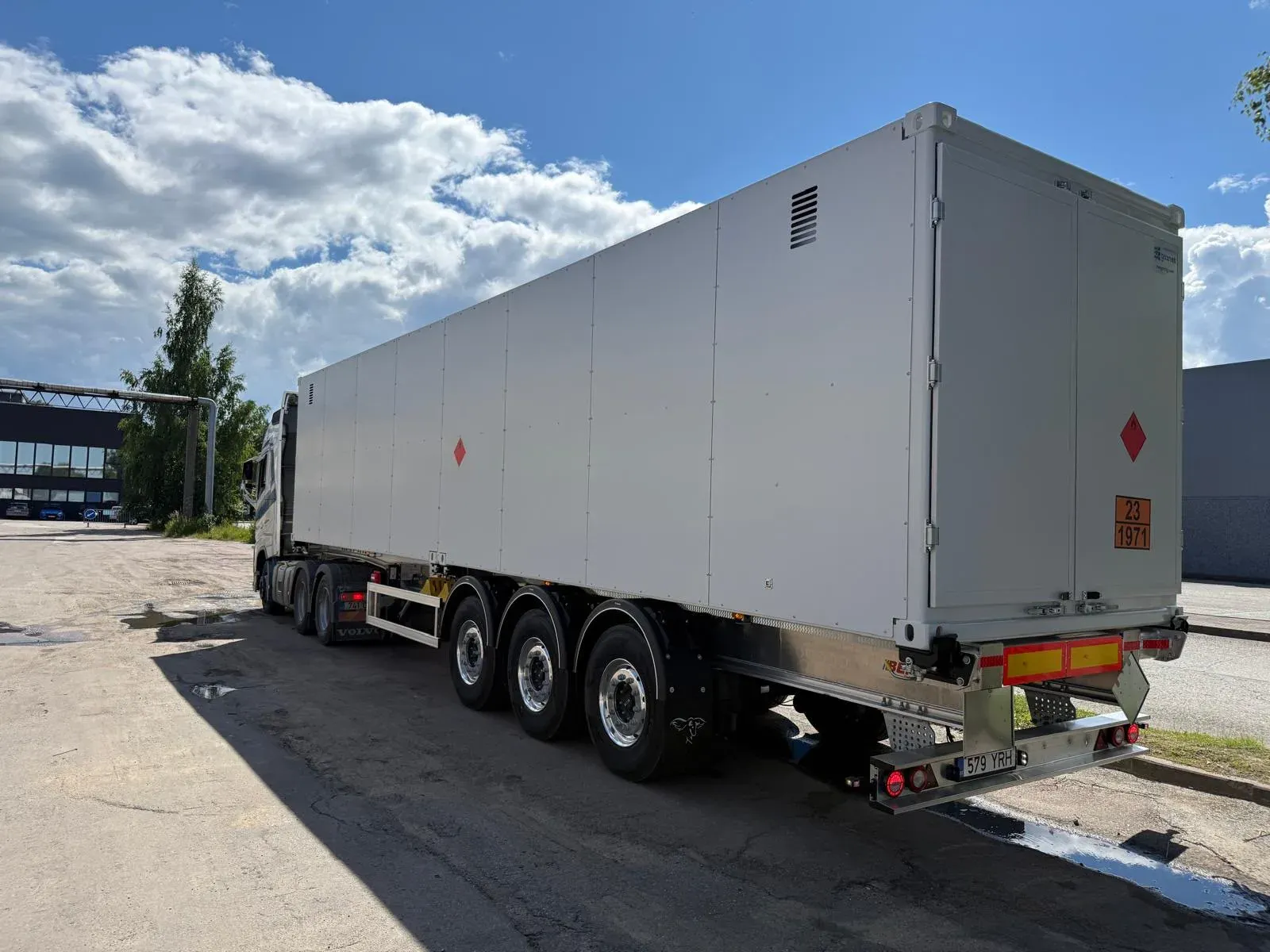
ADR type approval for a MEGC: the complete document pack
Every document required to type-approve a Multi Element Gas Container and to operate it legally under ADR — the full checklist, and what to do if your supplier is missing one.
Energy
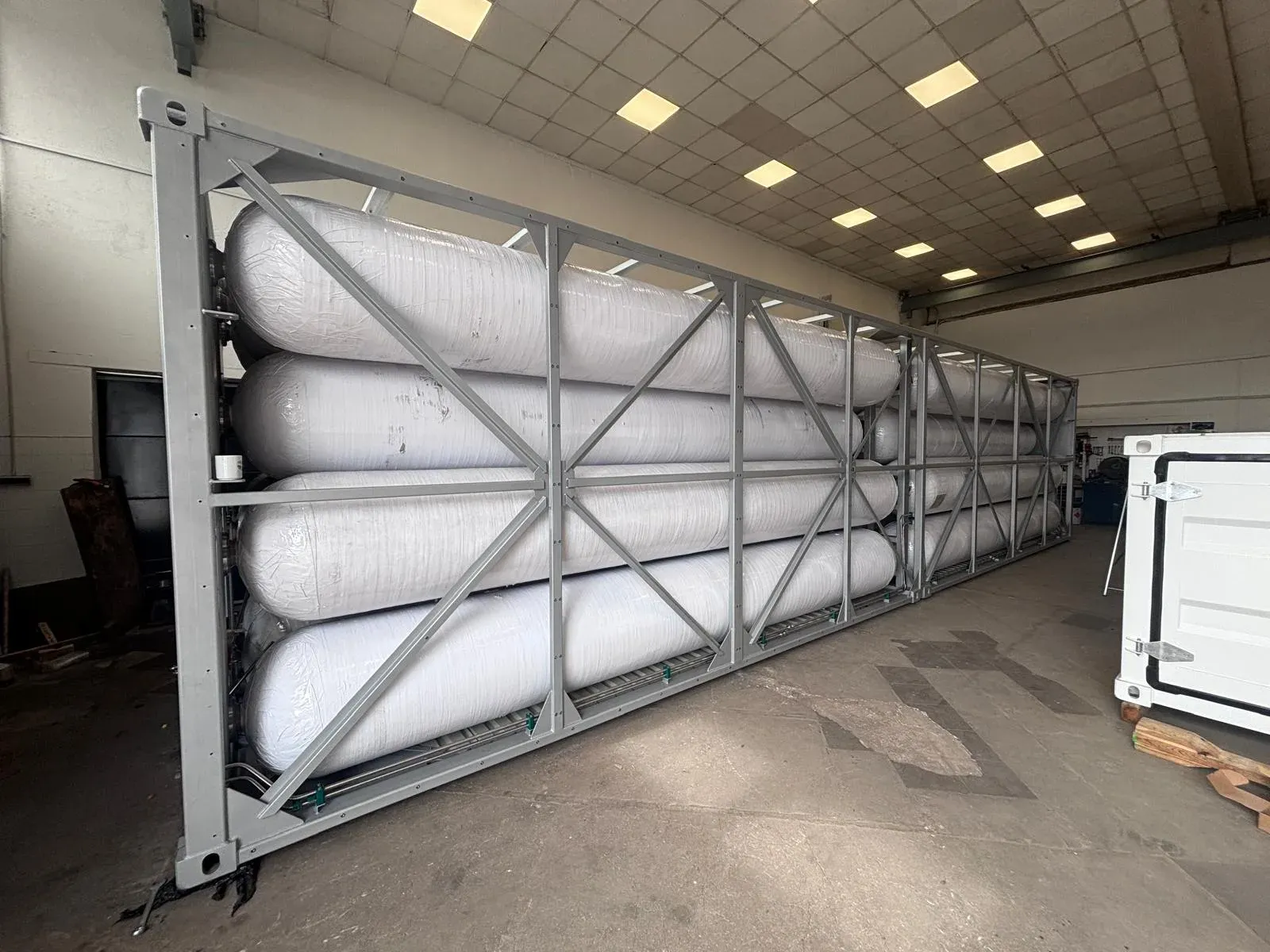
How much biomethane fits in a MEGC? The real numbers at 250 bar
Actual payload of a 20 ft and 40 ft MEGC in kg, Nm³ and MWh, calculated with real-gas densities — plus the temperature effect that costs you 10% of every load.
Energy
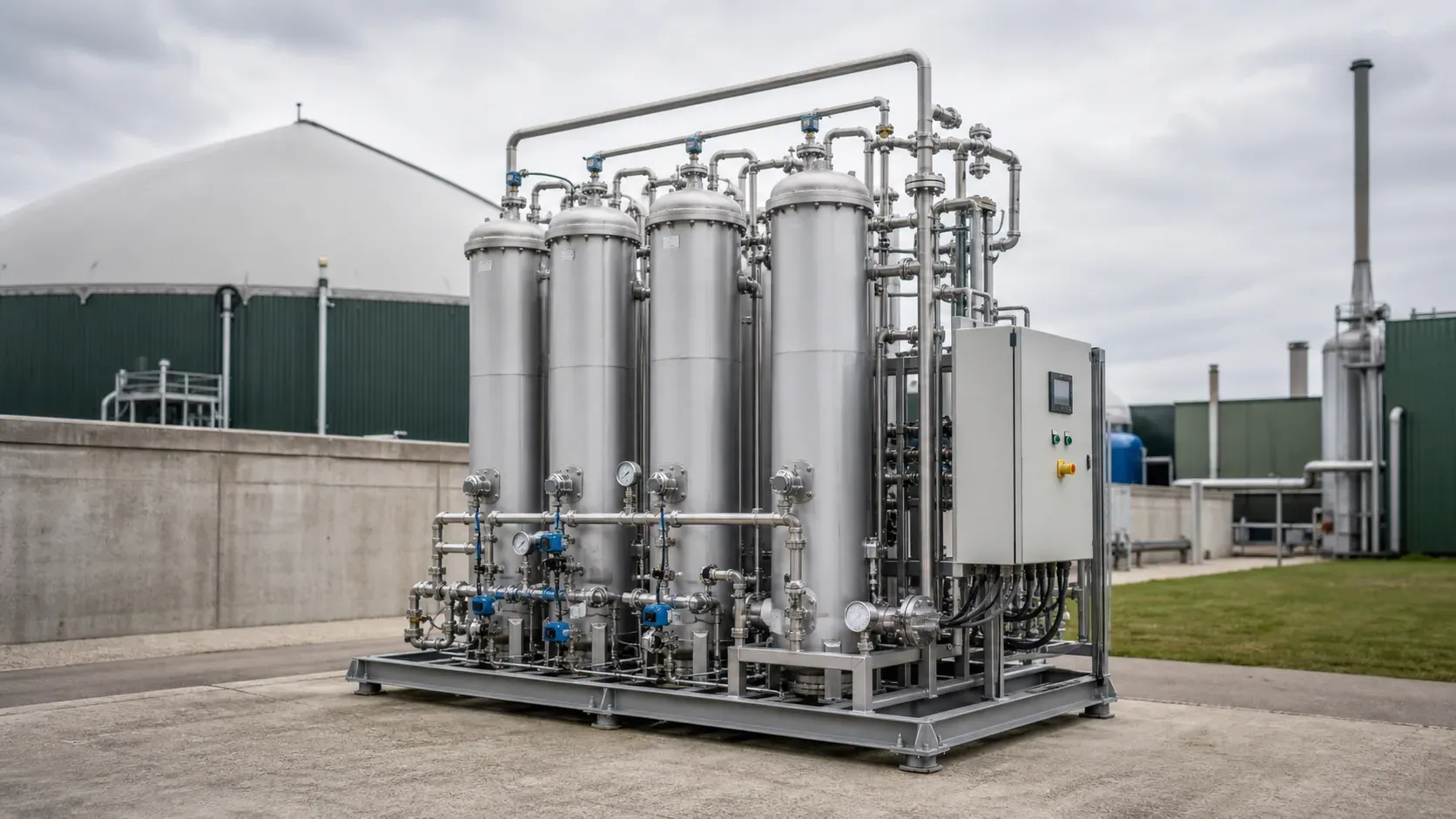
Pressure swing adsorption for biomethane production
How PSA upgrades raw biogas to pipeline-quality biomethane, including the science, operating economics, and cases where it is the right choice.
Talk to our engineers
From CNG and biomethane to hydrogen — we'll scope your project and reply within one working day.