
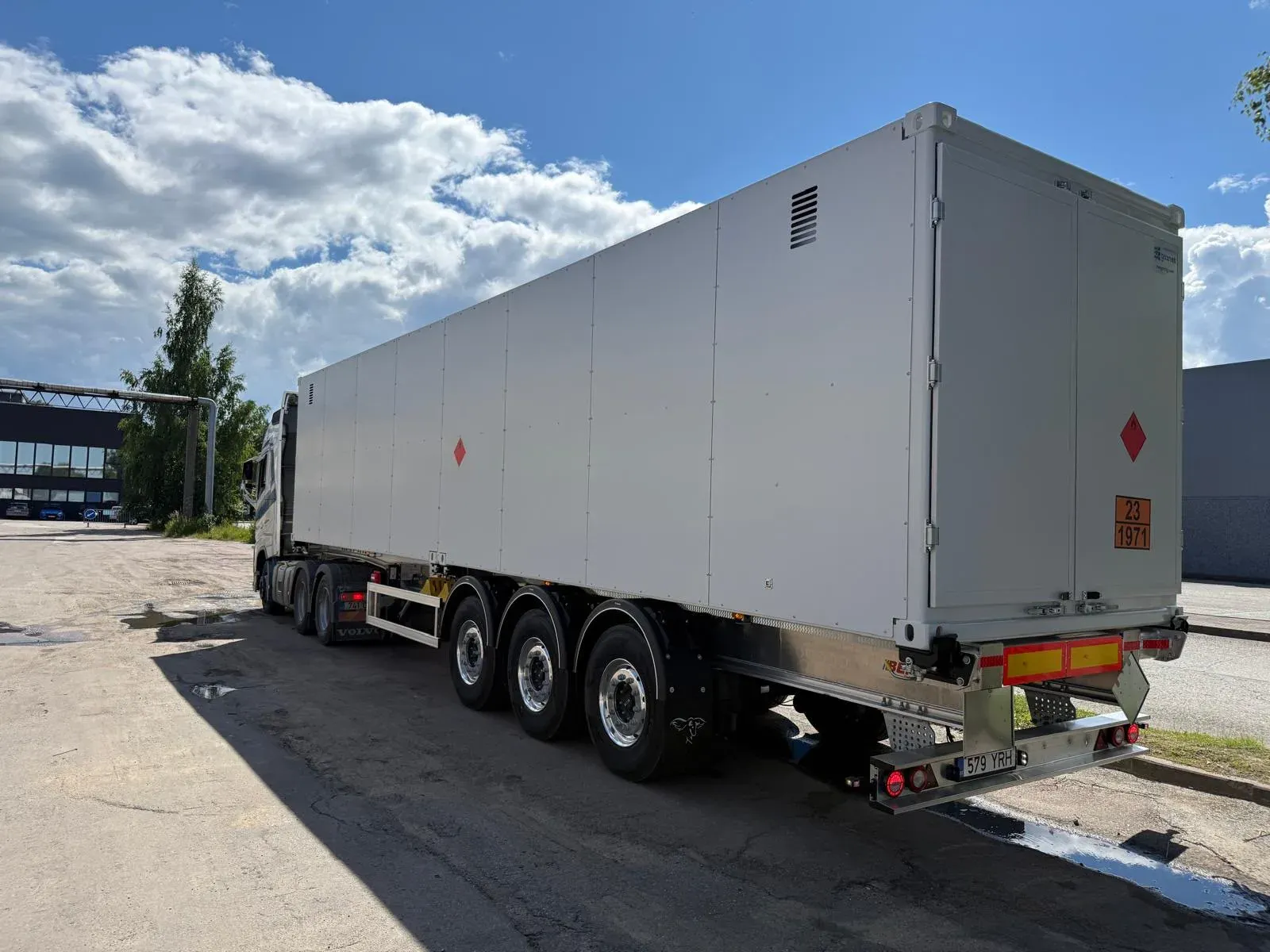
A Multi Element Gas Container is not a container. Legally it is pressure equipment that happens to be transportable, and it sits at the intersection of two regimes: TPED for the pressure equipment and ADR for carrying dangerous goods by road.
That means paperwork. Rather more of it than most first-time buyers expect, and the consequences of a gap are not administrative — an incomplete pack means the unit cannot be registered, cannot be insured properly, and in the worst case is stopped at a roadside inspection with gas on board.
This is the full list, in both directions: what the manufacturer needs to obtain approval, and what you as the operator must hold for the life of the unit.
Part 1 — Documents required to apply for ADR type approval
This is the manufacturer’s side. You will not normally assemble these yourself, but you should know they exist, because a supplier who cannot name them has not done this before.
| Document | What it establishes |
|---|---|
| Type approval application | The formal submission to the competent authority |
| Scope of supply | Exactly what is in the approved configuration, and what is not |
| Technical specification | Pressures, volumes, materials, temperature range, cylinder type |
| Design basis | The standards and calculations the design is built on |
| Serial numbering philosophy | How individual units and cylinders are identified traceably |
| Nameplate draft | The physical plate, exactly as it will be stamped |
| Document register / MDR template | The index of the whole Manufacturing Data Record |
Two of these are worth dwelling on.
Serial numbering philosophy sounds like bureaucracy and is not. It is what lets you trace an individual cylinder back to its batch, its proof test and its approval fifteen years from now, when it comes up for periodic inspection and somebody asks. Get it wrong at the start and it cannot be fixed retroactively.
The nameplate is the unit’s legal identity. Everything on it must match the approval exactly. A nameplate that disagrees with the certificates is a unit that fails inspection, and re-stamping is not a five-minute job.
Part 2 — Documents required to operate the equipment
This is the pack that must be handed over with the container, and that you must be able to produce on demand.
| Document | Why you need it |
|---|---|
| EU Type-Examination Certificate | The approval itself — the legal basis for operating |
| Certificate of Conformity | Declares this unit conforms to that approved type |
| P&ID | The piping and instrumentation diagram — required for any modification, repair or hazard assessment |
| ATEX report | Explosive atmosphere assessment and zone classification |
| Detail component overview list | Every valve, fitting and safety device, by manufacturer and type |
| Equipment certificates | The individual certificates behind every item on that list |
| Cylinder proof test | Pressure test records for each cylinder |
| Manifold proof test | Pressure test record for the manifold assembly |
| Initial inspection | The first statutory inspection, before entry into service |
| In-house inspection certificate | The manufacturer’s own quality record |
| Paint layer inspection | Coating thickness and adhesion — the corrosion protection record |
| Lifting instructions | How the unit may be lifted, and how it may not |
| User manual | Operating limits, filling and offloading procedure, maintenance intervals |
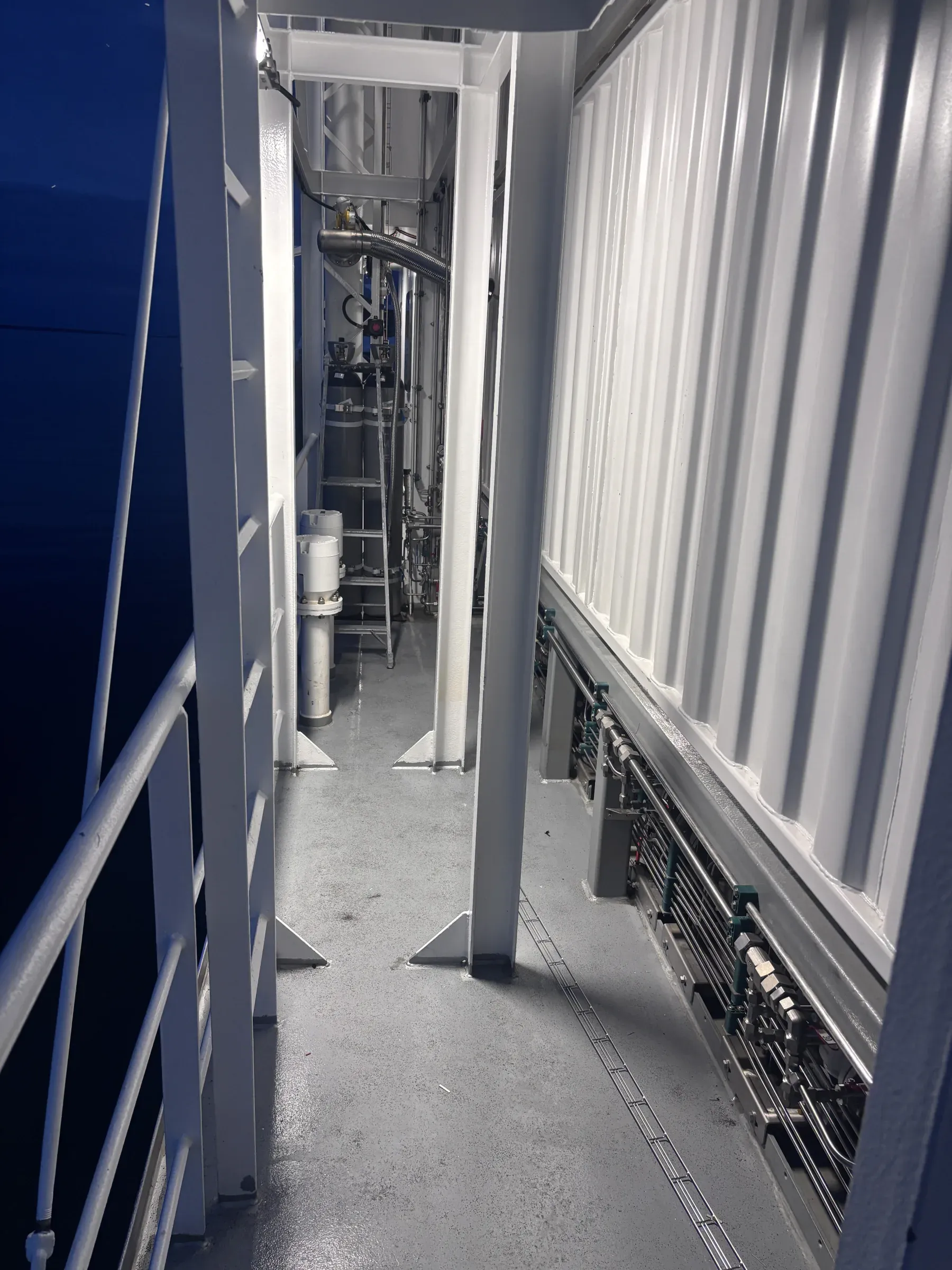
A downstream CNG pressure-reduction installation, separate from the MEGC. Its valves, instruments and pipework require their own project documentation and certificates.
The ones people discover they are missing
In our experience four documents are the usual gaps, and they are the ones that are hardest to obtain after the fact:
The detail component overview list, with its certificates. When a valve fails in year six and you need an identical replacement to stay within the approval, this list is the only thing that tells you what it was. Without it you are reverse-engineering a fitting from a photograph.
The ATEX report. Often skipped by suppliers who treat the MEGC as a transport item rather than as an installation. You will need it the moment the unit is parked at a site and becomes part of someone’s zone plan.
Paint layer inspection. It sounds trivial next to a burst test. It is the record that governs the corrosion protection of the frame, and on a steel frame that spends its life outdoors it is the difference between a twenty-year asset and a ten-year one.
The P&ID. Any modification, any repair to the pipework, any serious hazard study needs it. Reconstructing one from a built unit is expensive and never quite trustworthy.
What to ask a supplier before you sign
Three questions. The answers tell you a great deal.
- “Send me your MDR index for a unit you have already delivered.” Not a promise of what will be included — the actual index from a real delivery. A supplier who has done this properly can send it the same day.
- “Which competent authority issued the type approval, and what is the certificate number?” Then check it.
- “Is the approval for this exact configuration?” An approval covering an 11-cylinder 20 ft does not automatically cover an 18-cylinder 40 ft, and it does not cover a different cylinder or a different manifold. Configuration changes need the approval to follow them.
A container is straightforward to build compared with getting it approved. If a quotation is notably cheaper than the alternatives, this is usually where the difference is hiding. The unit arrives, and then you find out what you are missing.
How Gaznet delivers it
Every Gaznet MEGC ships with the complete pack above, indexed to the Manufacturing Data Record, cylinders certified to EN 12245 and the unit approved under TPED and ADR. The serial numbering carries through from the individual cylinder to the nameplate, so periodic inspection in year ten is a lookup rather than an investigation.
When you specify a unit with us, ask for the MDR index up front. It is part of the delivery, not an extra, and seeing it before you sign tells you more about a supplier than any brochure will.
Related reading
Energy
20 ft vs 40 ft MEGC: where the money actually is
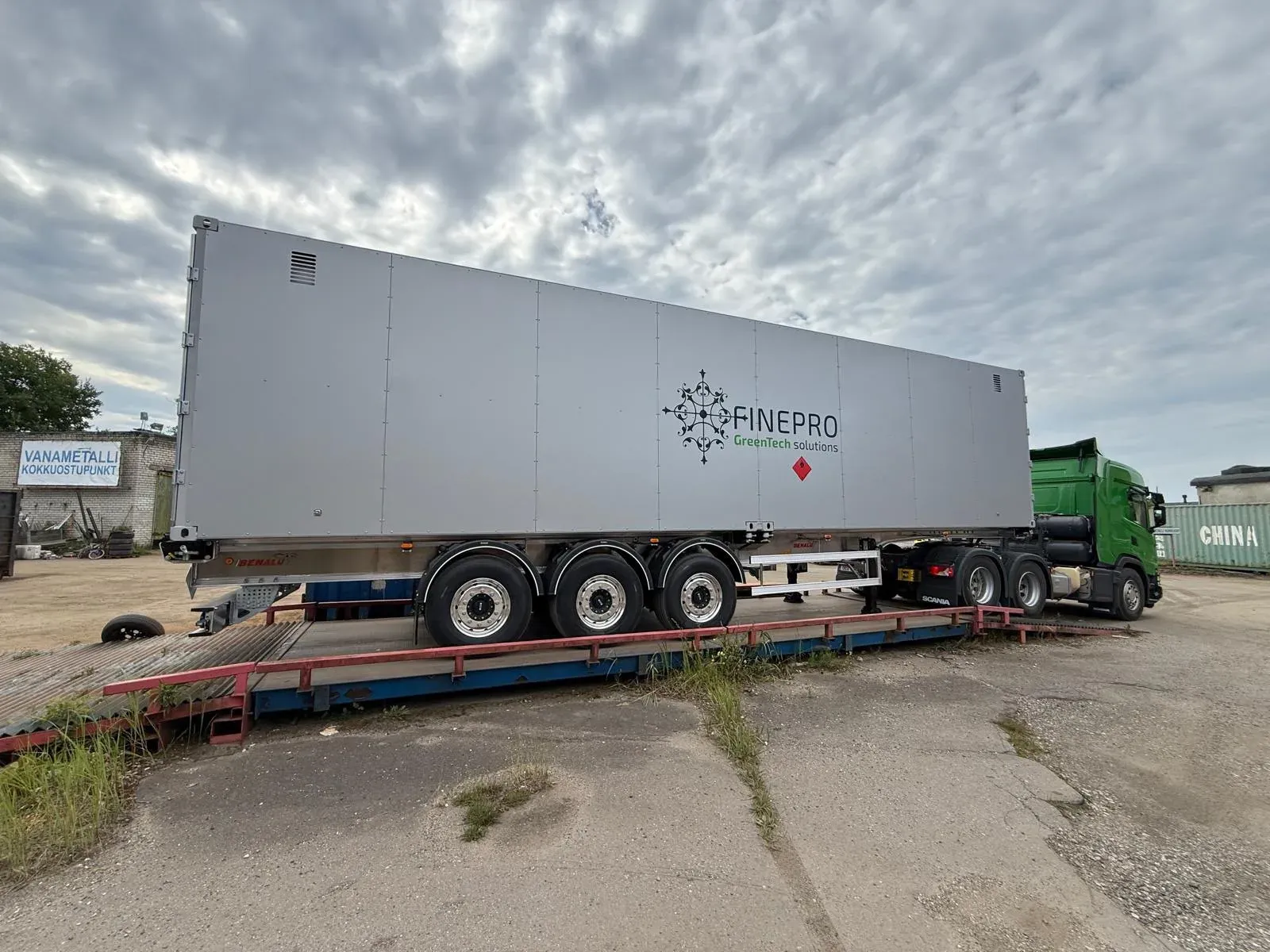
The 40 ft MEGC is not cheaper per Nm³ to buy — cylinders are 75% of the cost and scale linearly. Its entire advantage is in the truck. Here is the break-even.
Energy
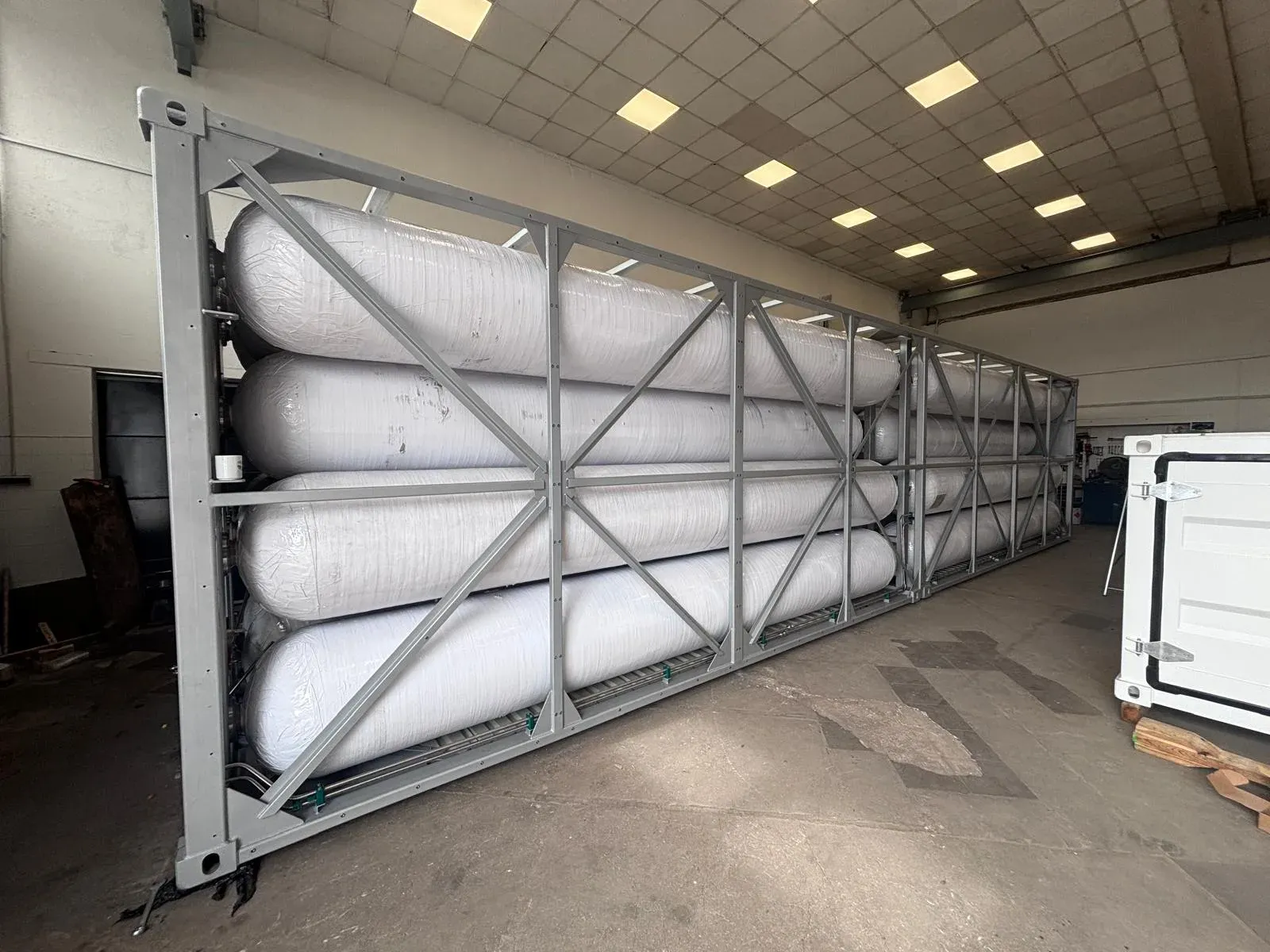
How much biomethane fits in a MEGC? The real numbers at 250 bar
Actual payload of a 20 ft and 40 ft MEGC in kg, Nm³ and MWh, calculated with real-gas densities — plus the temperature effect that costs you 10% of every load.
Energy
Pressure swing adsorption for biomethane production
How PSA upgrades raw biogas to pipeline-quality biomethane, including the science, operating economics, and cases where it is the right choice.
Talk to our engineers
From CNG and biomethane to hydrogen — we'll scope your project and reply within one working day.